Showing posts with label chemistry. Show all posts

Sunday, March 19, 2017

Sample GRE Q55

Turns out this blog is still up and running :-) so here is a new one: Sample GRE biochem test, question 55 with P+ of 31% (from 2016 edition) [*P+ is percentage of test takers who gave correct answer.]

An amino acid transporter protein is responsible for the transport of a specific amino acid across a membrane. The KI values of several competitive inhibitors of the amino acid transporter are shown above. Based on these data, which of the following is most likely the amino acid transported by this protein?


Show answer
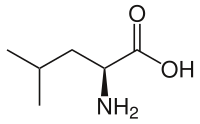
Correct answer is E And here is why. First, let's unwrap some of the language. "The inhibitor constant, Ki, is an indication of how potent an inhibitor is; it is the concentration required to produce half maximum inhibition." (here) So, the higher the Ki, more inhibitor concentration is necessary to prevent our transporter from moving amino-acid X through the membrane. It is also mentioned in the question that inhibitors are competitive. That means, to some degree, that inhibitors are similar in structure to that of the amino-acid X. Most similar inhibitor will then have lowest Ki, is est will occupy transporter's "slot" very nicely preventing amino-acid X from binding. In other words, inhibitor with lowest Ki will have most similar structure. Lowest Ki belongs to competitive inhibitor #3 (calledethyl benzene, by the way). It might be useful to notice second-best inhibitor as well, #5 (isoamyl alcohol). Both of these compounds are relatively not charged. Now let's look at structures of all possible answers:
(A)
(B)
(C)
(D)
(E)


As you can see, only tyrosine (E) carries benzyl group and also has less charge than other compounds. hence the answer is E

Friday, November 6, 2009

Questionnaire #2

Several GRE-ST questions linked together.
Questions 118-121 refer to the following cellular processes.
(A) Phagocytosis
(B) Exocytosis
(C) Endocytosis
(D) Transcytosis
(E) Apoptosis

118. Movement of plasma membrane receptors from the basolateral surface to the apical surface of polarized epithelial cells
119. Up-regulation of glucose transporters at the plasma membrane
120. Selective retrieval of cell-surface proteins for recycling or degradation
121. Neurotransmitter release

Questions 124-126 refer to the following protein-modifying reagents.
(A) Chymotrypsin
(B) Cyanogen bromide
(C) Iodoacetamide
(D) Phenylglyoxal
(E) Pyridoxal 5′-phosphate

124. Forms a Schiff-base linkage with the epsilon-amino group of lysine residues
125. Specifically cleaves polypeptides on the carboxyl side of methionine residues
126. Generally used as a sulfhydryl-modifying reagent

Questions 127-129 refer to the following cell structures.
(A) Thylakoid membrane
(B) Nuclear lamina
(C) Eubacterial cell wall
(D) Plant cell wall
(E) Endoplasmic reticulum

127. Its assembly is inhibited by penicillin.
128. It is formed from polymeric fibrils composed of cellulose cross-linked by pectin and hemicellulose.
129. It is the site of dolichol phosphate function.
Show answers
It is important here to notice that one answer can be right for several questions.
Now lets try to describe each process announced. So phagocytosis is process of "eating" external organells by the cell. It is quite close to endocytosis, when – in contrast – molecules are being absorbed. Exocytosis is opposite process – secretion of molecules into external space. It can be hormones, antibodies and so on. Transcytosis is interesting process of transporting molecules from apical (absorbing) space of polarized cells to basolateral space, which happens, for example, when antibodies are transported through baby rat's gut. Main idea is that molecules are absorbed into internal vesicles (as during endocytosis) and then after several steps containers' content is exposed as during exocytosis. No target molecules are left in cell's plasma. Interesting is that cell can regulate exposure of some proteins in the cell membrane using transcytosis. During latent phase (e.g. while there is no great need in glucose) transporters are stored incorporated in vesicles inside the cell. But in case of emergency (or if cell is stimulated, by insulin in our case) that vesicles fuse into plasma membrane and transporters expose into extracellular space and begin to work. Last one is apoptosis which is self-destroying of the cell. That happens if crucial malfunction appear or cell's mission was fulfilled. So the answer are like that. I suppose, answer D is suitable for both two first questions.
118 D. 119 D. 120 C. 121 B.

Chymotripsin is protein, enzyme actually, of so-called class of proteases. It cleaves specific polypeptide regions near serine, so it is called serine protease.
Cyanogen bromide is simple small molecule CNBr and, as written in wikipedia, is used to immobilize proteins by gluing them to agarose gel during chromatography. But more important is that CNBr cleaves polypeptide chains at C-terminus of methionine.
Iodoacetamide is substance that can bind covalently with cysteine to prevent formation of disulfide bonds. So it can be called sulfhydryl modifying reagent.
Phenylglyoxal modifies arginine.
Pyridoxal 5′-phosphate (or PLP) is active form of vitamin B6. As written in wikipedia (again, yeah) it forms Schiff-base linkage the ε-amino group of a specific lysine group of the aminotransferase enzyme.
124 E. 125 B. 126 C.

This questions uncovers very specific properties of very important and well-known objects. So I will not discuss all of them, but just give right answers and some interesting details if I find any.
All options are common in one: they are membranes or structures, that acts like membranes – support shape (cell walls and nuclear lamina) and protect internal content. But they have different structure, functions and behavior.
127 C. Notice that eubacteria is synonym for bacteria.
128 D. 129 E. Dolichol phosphate acts in formation of membrane-associated glycoproteins, so I suppose its site is on the ER membrane.

#13 Hydrogen bonds

Which of the following pairs of molecules could NOT hydrogen bond with each other?


Show answer
Answer can be easily found in MBoC in few first chapters (page 57 :). Main idea about hydrogen bonds is that it is an interaction between two partial charges: d+ and d- or partial charge d+ with net charge on atom. So if there is shift of electrical density on some atom from hydrogen and same situation happened with atom on another molecule (actually this can be one molecule and hydrogen bond will occur because of its flexibility) hydrogen bond will establish. Note that its strength is about 20 times less than covalent bond's.
Right answer thus is D because there is no shift of electron density to the ring. In other cases there is possibility exists for hydrogen bonds to occur: between H-O- and O=H2 (A), H-OH and O= (B), -NH and O- (C), -OH and O= (E).

Monday, October 26, 2009

Questionnaire #1

That is first series of short (with short description as well as answer) questions from GRE Subject Test.
#5
Most of the dry mass in the trunk of a tree was originally derived from
(A) the soil
(B) light energy
(C) amino acids
(D) CO2
(E) glucose
Show answer
As soon as dry mass of the trunk of a tree consists mainly of oligosaccharides its source should contain carbon and hydrogen. Soil is too much common answer for me. Light energy can't be right answer because energy is not converted into matter easily. Amino acids is strange idea also. So let's check two options: CO2 and glucose. As this question – obviously – touches photosynthesize process, which yields glucose and other carbohydrates, I pick up CO2 as an answer.

#13
Which of the following types of molecules is always found in virions?
(A) Lipid
(B) Protein
(C) Carbohydrate
(D) DNA
(E) RNA
Show answer
First, we should define what virion is. Surprisingly, it is just one instance of object virus. So you talk about virus (e.g. fag T4) properties, but when you meet one in the shop, it is virion.
What do we know about virions? They are simple systems which are not really cells because of lack of membrane and other important compartments as well as functions and facilitates. They have got capsid – hard-breaking protein-lipid armor around internal stuff. Inside they have some proteins and nucleic acid: either DNA or RNA, either single- or double-strained molecules. So the answer is proteins as molecules, that are found in all viruses and thus virions.

#31
The difference between the molecular weight of sucrose and that of the sum of the molecular weights of its components (glucose and fructose) is
(A) 0
(B) 1
(C) 16
(D) 18
(E) 180
Show answer
If you remember scheme structure of sucrose as O_O (:-) you get the idea of question. The reaction of such polymerization looks like that:
Glu-OH + OH-Fru = Glu-O-Fru + HOH
Thus, difference is in one water molecule which is 2 hydrogen atoms and 1 oxygen. The answer is D: 18 = 2*1 + 16.

#34
An alpha-helical conformation of a globular protein in solution is best determined by which of the following?
(A) Ultraviolet-visible absorbance spectroscopy
(B) Fluorescence spectroscopy
(C) Electron microscopy
(D) Analytical ultracentrifugation
(E) Circular dichroism
Show answer
I really looooove fluorescence. So I hope it is the right answer, but lets be patient.
Electron microscopy is not good idea, because it can't show us structure of the protein as x-ray crystallography make it possible.
Ultracentrifugation, I suppose, will not help us because it will just sediment peptides and nothing more.
Circular dichroism is damn strange stuff I don't know much about. But google fetched me nice page about circular dichroism. I got the idea of that method: difference in absorbances of left- and right-polarized light is higher if peptide is structured. It is rather similar to fluorescence anisotropy. High anisotropy shows that fluorophore is fixed in space (and time :-) It can also predict stable structures as alpha-helices or beta-layers.

Sunday, October 25, 2009

#3 Membrane phospholipids

This one is MBoC:PB question 10-28.

A classic paper studied the behavior of lipids in the two monolayers of a membrane by labeling individual molecules with nitroxide groups, which are stable free radicals (Figure 10-3). These spin-labeled lipids can be detected by electron spin resonance (ESR) microscopy, a technique that does not harm living cells. Spin-labeled lipids are introduced into small lipid vesicles, which are then fused with cells, thereby transferring the labeled lipids into the plasma membrane.
The two spin-labeled phospholipids shown in figure 10-3 were incorporated into intact human red blood cell membranes in this way. To determine whether they were induced equally into the two monolayers of the bilayer, ascorbic acid (vitamin C), which is a water-soluble reducing agent that does not cross membranes, was added to the medium to destroy any nitroxide radicals exposed on the outside of the cell. The ESR signal was followed as a function of time in the presence and absence of ascorbic acid as indicated in Figure 10-4A and B.
A. Ignoring the moment of the difference in extent of loss of ESR signal, offer an explanation for why phospholipid 1 (10-4A) reacts faster with ascorbate than does phospholipid 2 (10-4B). Note that phospholipid 1 reaches plateau in about 15 minutes, whereas phospholipid 2 takes almost an hour.
B. To investigate the difference in extent of loss of ESR signal with the two phospholipids, the experiments were repeated using red cell ghosts that had been resealed to make them impermeable to ascorbate (Figure 10-4C and D). Resealed red cell ghosts are missing all of their cytoplasm, but have an intact plasma membrane. In these experiments the loss of ESR signal for both phospholipids was negligible in the absence of ascorbate and reached plateau at 50% in the presence of ascorbate. What do you suppose might account for the difference in extent of loss of ESR signal in experiments with red cell ghosts (10-4C and D), versus those with normal red cells (10-4A and B).
C. Were spin-labeled phospholipids introduced equally into the two monolayers of the red cell membrane?
Show answer
We will go number-by-number.
A. I think that the speed of ESR signal extinction is linked with probability of reaction between ascorbate and nitroxide group. Thus, speed of phospholipids 2 signal extinction should be significantly less than for phospholipids 1, because it is not as easy for ascorbate to hit side chain than head group.
B. Simple comparison of ghosts membranes and intact cells tells us that there should be kind of agent – reducing agent – in the red cells' membranes that can attack head groups but not side chains. Of course red cell ghosts lack that agent, so only ascorbate acts. That is why loss of ESR signal in 10-4A is 50% in abscence and 100% in presence of ascorbate. Also this idea explain ESR signal reaction in ghosts also.
C. Yes, they were introduced equally in the interior and exterior layers of membrane. This is right both for intact cells ("natural" 50% signal decrease) and for ghosts (50% decrease in presence of ascorbate).

Now lets check the right answer.
A. The difference in rate of loss of the ESR signals is due to the location of the nitroxide radical on the two phospholipids. The nitroxide radical in phospholipid 1 is on the head group and is therefore in direct contact with the external medium. Thus, it can react quickly with ascorbate. The nitroxide radical in phospholipid 2 is attached to a fatty acid chain and is therefore partially buried in the interior of the membrane. As a consequence, it is less accessible to ascorbate and is reduced more slowly.
B. The key observation is that the extent of loss of ESR signal in the presence and absence of ascorbate is the same in resealed red cell ghosts, but different in red cells. These results suggest that there is an undefined reducing
agent in the cytoplasm of red cells (which is absent from red cell ghosts). Like ascorbate, this cytoplasmic agent can reduce the more exposed phospholipid 1, but not the less exposed phospholipid 2. Thus, in red cells, phospholipid 2 is stable in the absence of ascorbate; in the presence of ascorbate, the spin-labeled phospholipids in the outer monolayer are reduced, causing loss of half the ESR signal. Phospholipid 1, on the other hand, is not stable in red cells in the absence of ascorbate because the phospholipids in the cytoplasmic monolayer are exposed to the cytoplasmic reducing agent, which destroys half the ESR signal. When ascorbate is added, labeled phospholipids in the outer monolayer are also reduced, causing loss of the remaining ESR signal.
C. The results in Figure 10–4 indicate that the labeled phospholipids were introduced equally into the two monolayers of the red cell plasma membrane. Phospholipid 2 was 50% sensitive to ascorbate, indicating that half the label was present in the outer monolayer, and 50% insensitive to ascorbate, indicating that half was present in the cytoplasmic monolayer. Similarly, phospholipid 1 was 50% sensitive to the cytoplasmic reducing agent and 50% sensitive to ascorbate, indicating an even distribution between the cytoplasmic and outer monolayers.

Saturday, October 24, 2009

#2 Sweetened salad dressing

Ok, this one is from GRE Subject test (question number 16) and rather "chemical".
If sucrose and monosodium glutamate (MSG) are added to vinegar and oil salad dressing and shaken, the mixture will eventually separate into two phases of different density and polarity. Where will most of the sucrose and the MSG de located following phase separation?
(A) Both will concentrate in the vinegar
(B) Both will concentrate in the oil
(C) Both will concentrate at the interface
(D) Sucrose will concentrate in the oil and MSG – in the vinegar
(E) Sucrose will concentrate in the vinegar and MSG – in the oil
Show answer
Lets think a bit. The key word in the question for me is "density" and also I can't understand what "polarity" means and what role does it play.
So we will use density approach.
If you google a bit, you'll find – as I did – that oil density is about 0.9 g/ml and sucrose density is 1.5 g/cm3 (=1.5 g/ml) when MSG density is about twice less (lets say 0.7g/ml). So oil will be on the top, above vinegar. Sucrose will  precipitate (so it will be in vinegar). The question is where MSG will get to. Its approximate density is less than oil's so it will be on the top of the mixture.
So my answer is E. I have no idea how to get another way to find answer, maybe it is just knowledge test.

#0 question

Question number 1 from GRE-Subject test.
Which of the following represents the most
reduced form of carbon?
(A) R-CH3
(B) R-COOH
(C) R-CHO
(D) R-CH2OH
(E) CO2
Show answer
Let's go from the opposite. Antonym for reduced is oxidized, which means "with deleted electrons". So 5 is obviously not the right answer, because oxygen is highly electron-horny element, it pulls electrons from all around (only F – fluorine – is more powerful). So number 1 is our choose.
Test of blog ans script (answer toggler) is pretty well passed.